

Risk Management · 2025
In this section3 topics
Risk Management Policy & Plan
Policy & Plan Description
Overview of Risk Management
The company recognizes and appreciates the importance of good organizational risk management to drive organizational growth and stable business expansion, maintain a strong financial position, and generate appropriate returns for shareholders. This also aligns with the principles of Good Corporate Governance and the system of checks and balances in the current competitive business environment, which is constantly changing due to external or internal factors. These changes may affect the company's ability to achieve its main goals and missions. Initially, the Risk Management Committee has been assigned the responsibility of establishing comprehensive risk management policies for the entire organization and overseeing the implementation of risk management systems or processes to appropriately mitigate impacts on the company's business.
Risk Management Policy and Plan
The company recognizes the importance and necessity of adopting an international standard risk management system used in management, aiming for the company to be a key organization that creates customer satisfaction, maintains a good image, and develops.
1. The Risk Management Committee is responsible for considering and establishing risk management policies, both external andwithin the company to be comprehensive and consistent with the business strategy and direction. This must cover at least the following risks 5 aspects as follows:
(a) Financial Risk
(b) Operational Risk
(c) Strategic Risk
(d) Compliance Risk
(e) Risk from Business Environment
2. Risk management is designated as the responsibility of employees at all levels, who must be aware of the risks involved in their respective departmental operations and the organization. Emphasis is placed on managing various types of risks and systematically managing them under internal controls to an adequate and appropriate level.
3. An organizational risk management process that adheres to good international standards shall be established to ensure efficient management of risks that may affect the company's operations. This will foster development and consistent risk management practices across the organization, integrating the risk management system into decision-making, strategic planning, operational plans, and company operations. It also aims to achieve the defined objectives, goals, vision, mission, and strategies to create operational excellence and build stakeholder confidence.
4. Guidelines are established for preventing and mitigating operational risks of the company to avoid potential damages or losses, including regular monitoring and evaluation of risk management performance.
5. Promote and develop the adoption of modern information technology systems in the company's risk management processes and support personnel at all levels in accessing risk management information comprehensively, as well as establishing an efficient risk management reporting system for the Risk Management Committee.
Risk Management Governance
The company stipulates that risk governance is an integral part of overall company management to ensure that the governance structureand responsibilities are appropriate and can promote effective risk management.
Therefore, the company's governance structure and responsibilities are defined as follows:
Company's Risk Management Structure
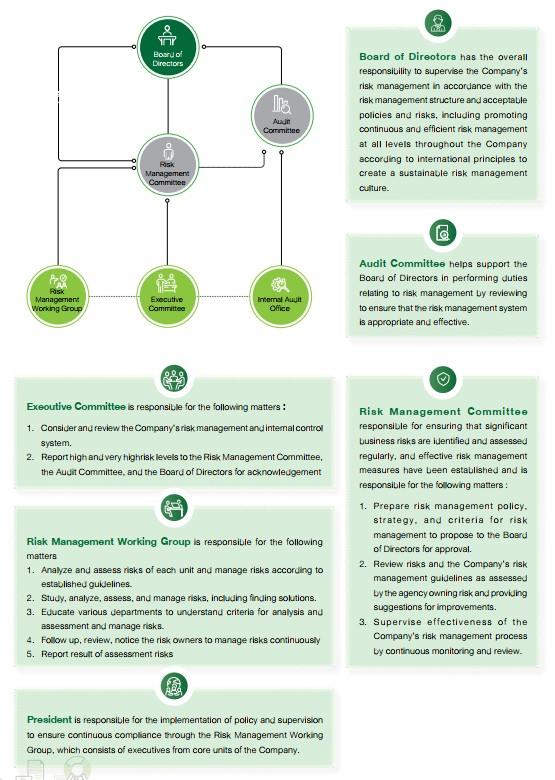
Policy Document Link
https://investor.hengleasing.com/en/corporate-governance/corporate-governance-policy
Page Number in Report
63-68
Risks to the Company's Business Operations
Risk Register
| Risk Name | Risk Characteristics | Consequences | Management Measures | Related Risk Factors |
|---|---|---|---|---|
| Strategic Risk | Risks arising from loan expansion not proceeding as planned: Currently, the company uses branches as its primary channel for providing loan services and other services. There are plans for continuous branch expansion to increase service capacity and accommodate the needs of existing and new customers, as well as to diversify risk in case of events affecting business operations in specific areas. Risks from competition in the hire purchase loan industry, regulated personal loans, regulated microfinance loans for business purposes, and other loan products; entry of new competitors into the industry; and technological disruption. The loan service business has numerous operators, both existing and new lenders. Other lenders are expanding their loan service channels through online platforms and utilizing technology in the loan approval process to improve service speed and efficiency. Furthermore, consumer behavior is increasingly shifting towards applying for loans online. Marketing and customer service risks: Over the past several years, the Thai retail loan industry has seen increasingly fierce competition in marketing and communication from major lenders, new players in the area, and online platforms for comparing loan information. This has forced the company to adapt its communication strategies and customer reach to maintain competitiveness. At the same time, consumer behavior is constantly changing. Customers are increasingly using online channels to search for and compare loan information through social media, review websites, and financial communities, leading to significantly higher expectations for accuracy, clarity, and speed in providing information. | Risks associated with loan expansion not meeting the established business plan: If the company is unable to expand loans according to its business plan, experiencing delays or operational disruptions due to various factors such as inability to secure suitable locations for new branches, inability to recruit qualified personnel, or insufficient capacity of branch service staff to meet targets, the company may be unable to effectively meet customer needs. Furthermore, increasingly fierce competition in the personal loan business in the areas where branches are located, due to the expansion of competitors into the same areas, may result in new branches failing to meet various operational targets set by the company, such as loan value targets, number of loan contracts targets, debt collection and follow-up targets, insurance sales targets, or operating expense targets, or failing to achieve expected return on investment. Such factors could negatively impact the business, operating results, financial position, and business opportunities of the company. Risks from competition in the hire purchase loan industry, regulated personal loans, regulated microfinance loans for business purposes, and other loan categories, including the entry of new competitors into the industry. Technological Disruption The government's policy supporting peer-to-peer (P2P) lending and digital personal loans has led to increased interest from new entrants in the lending industry, offering services online. This has also intensified competition through promotional offers such as higher loan amounts, reduced interest rates, and extended repayment periods to attract customers. Companies are also investing in improved service quality to compete with other providers. This could hinder the company's ability to increase loan disbursements according to its strategic plan, or lead to a decrease in the value of new loans disbursed. Currently, the company primarily operates through branches with operating hours of 8:00 AM to 5:00 PM Monday to Saturday, while consumers have 24/7 access to online lending services. Such events could negatively impact the company's business, performance, financial position, and business opportunities. Marketing & Call Center Risk In terms of geographical competition, the intensity of public relations and advertising in specific areas remains high, especially from larger competitors with significantly larger marketing budgets. This can result in companies facing brand visibility risks; in some areas, customers may not be sufficiently aware of the company's products or advantages. Furthermore, fluctuations in online platform algorithms create uncertainty in digital communication, requiring constant adaptation of content and channels to maintain effective customer reach. | Risks associated with loan expansion not proceeding as planned: The company's shareholders possess over 20 years of experience and expertise in the lending business. The company mandates a joint investment opportunity analysis among relevant departments, considering target customer groups, location, community density and characteristics, market conditions and competitors, consumer demand, local personnel, investment per branch, payback period, and expected return on investment. This analysis requires approval from the Executive Committee and/or the Board of Directors, in accordance with the company's approval authority schedule. Following investment, the company closely monitors and evaluates performance and adjusts operational plans based on changing circumstances. Furthermore, the company prioritizes the continuous development of its personnel, adhering to the fundamental principle that "excellent service leads to better business results (loan volume and debt collection)." This is achieved by cultivating a service culture that emphasizes developing a positive mindset and skills, and by fostering "change leaders"—branch managers who coach, educate, and disseminate excellent service practices to nearby branches. The company's identity is reinforced by being a locally-appointed service provider, willing to proactively understand customer needs as if they were part of the community, and performing professionally to the best of their ability. The long-term expectation is that these well-trained personnel will contribute to enhanced business results. And for the continued sustainability of its business operations, in 2025, the company plans to merge nearby branches to better meet customer needs and create a balanced operation, accessing new customer bases in line with the company's policy. Risks from competition in the hire purchase loan industry, regulated personal loans, regulated microfinance loans for business purposes, and other loan products; entry of new competitors into the industry; and technological disruption. The company has prepared a strategic plan to cope with competition within the loan industry by expanding its customer base to increase lending opportunities through branch expansion in high-potential areas; building brand awareness among customers in each area by creating good relationships to increase brand recognition and make the company the first choice for loan services (conversion); and maintaining existing customer retention strategies such as offering refinancing loans to increase loan amounts (up-selling), new loan types (cross-selling), or promotional discounts to customers who have made timely payments for a certain period. To enhance its competitiveness, the company also conducts marketing through referral programs with local partners, such as used car dealerships, to introduce hire-purchase loan products to those interested in buying cars. Furthermore, the company collaborates with community leaders to encourage them to recommend products to their members. In addition, the company focuses on developing loan products, creating new channels for product presentation, improving its customer database system, and enhancing the expertise of its personnel in loan analysis and approval. The company has also established future business planning measures to address changes in consumer behavior and technology. It regularly collects customer data to study loan usage and repayment patterns, analyzing trends and changes to inform its strategic planning. Currently, the company is developing online loan service channels as planned to meet future consumer demand and convenience, alongside branch services. Moreover, the company is streamlining its loan approval process to increase speed while maintaining the efficiency of the approval process to screen for high-quality applicants. In 2025, the company plans to focus on agricultural loans (nano-finance), providing small-scale loans to farmers to help them purchase essential agricultural materials and equipment such as fertilizers, pesticides, chemicals, and agricultural tools. The loan structure will allow farmers to access funds before or during cultivation. And repayment can be made later. Furthermore, the loan application process is simple, requiring only the farmer's green book as proof of application, making it easier for farmers to access funding. Marketing & Call Center Risk Under this competitive environment, the company has adjusted the number of branches in some areas to improve service efficiency. However, closing or relocating branches may cause misunderstandings among some customers, especially if the information received is inaccurate or incomplete. Some customers may mistakenly believe that the company has ceased operations, is unstable, or will stop accepting debt payments. Such misunderstandings can spread rapidly through social media and word-of-mouth in the community, leading to short-term and long-term risks to the company's image and credibility. In addition, customer awareness of news about branch closures or relocations is often reflected in the increased number of call center calls, especially during periods of widespread news dissemination, resulting in some customers having to wait on hold for extended periods. | 728 · Description: Volatility in the industry in which the company operates · Info category: STRATEGIC_RISK · 729 · Description: Behavior or needs of customers / consumers · Info category: STRATEGIC_RISK · 1714 · Description: Competition risk · Info category: STRATEGIC_RISK · 1715 · Description: Economic risk · Info category: STRATEGIC_RISK |
| OperationalRisk | Risks arising from the effectiveness of credit analysis and approval processes, which may impact the quality of the company's loan portfolio. Customer identity, ability to repay, current debt burden, and past repayment behavior are analyzed by branch staff, while branch managers, regional managers, or the credit control and approval department verify the accuracy of the data and approve loans. Loan approval authority is based on the loan amount as defined in the company's operational manual. Risk of non-collection of debts on time, which may arise from external factors beyond the company's control, resulting in significant additional costs. The company provides loans to customers with monthly repayment schedules. The company faces the risk of customers defaulting on payments or the inability to collect overdue or overdue payments. This may be due to external factors affecting the customer's ability and willingness to repay, such as macroeconomic conditions, the borrower's total debt burden, changes in occupation or income, etc., which will impact the company's loan status. This will impact the allowance for expected credit loss, and the company may incur additional operating expenses if it is unable to collect debts and must seize collateral for auction to repay the debt, or incur additional expenses in the event of litigation or legal action. These factors could negatively affect the company's business, operating results, financial position, and business opportunities. The risk of being unable to track down vehicles used as collateral for loan agreements or hire-purchase agreements in the event of default exceeding the period stipulated in the contract. The company's secured loan services are divided into two types: loans secured by vehicle registration certificates and hire-purchase loans. For loans secured by vehicle registration certificates, the borrower, who owns the vehicle, uses the original vehicle registration certificate as collateral and provides it to the company, along with signing a pre-arranged ownership transfer document. This allows the company to track and auction the vehicle to repay the debt. The risk of the sale of foreclosed assets not covering the outstanding debt or the inability to sell the assets. The company has assets held for sale resulting from customers defaulting on contracts by being unable to pay overdue installments. Risk of malfunction, disruption, or damage to the Information Technology system in business processes: The company has invested in and developed Information Technology systems for various business processes, including credit analysis, customer data recording, installment calculation, loan agreement preparation, debt collection and tracking, contract data management, collateral sales, accounting and financial management, human resource management, and legal proceedings. The company uses data from these Information Technology systems to prepare management reports, financial statements, and analyze the company's performance and financial position. Risk of reliance on senior management and key personnel with expertise and experience in various fields: The company relies on a team of senior executives with extensive experience and expertise in its industries, including professionals with long-standing experience in finance, lending, and other industries. If the company is unable to attract and retain senior management and key personnel, or cannot recruit replacements or add personnel within a timely manner, it could negatively impact the business, performance, and financial position. and the company's business opportunities. The company has established a Succession Plan and Career Development Program to develop potential personnel from within the organization, as well as recruiting potential personnel from outside the company for management and other key positions. This ensures that the company can recruit replacements for key positions within a reasonable timeframe. Furthermore, the company allocates compensation commensurate with the knowledge and abilities of each position, which the company believes is comparable to operators in similar industries. Risk of employee fraud in the company's core operational activities: Such as loan analysis and approval, installment payments, cash handling, debt collection, etc. The company has opened branches to support loan and installment payment services for customers, focusing on speed and efficiency to compete with other service providers. The company's core operational activities occur at the branches, such as loan analysis and approval, installment payments, cash handling, debt collection, and asset management. These activities may create opportunities for employee fraud, such as approving loans to unqualified individuals, embezzlement, or document forgery. Risk of loss or damage to loan agreements or collateral documents due to theft, fire, or natural disasters. | Risks arising from the inefficiency of credit analysis and approval processes, which may impact the quality of the company's loan portfolio. The efficiency of credit analysis and approval is a critical factor affecting the company's operational success. Although the company meticulously analyzes and approves loan data according to established procedures, it cannot guarantee consistent accuracy in the future. Factors affecting the quality of credit analysis and approval include the expertise of employees in credit data analysis, the expertise of employees in appraising collateral, the concealment of sensitive customer information, and employee fraud. Inefficient or erroneous credit analysis and approval can negatively impact the quality of the company's loan portfolio, leading to non-receipt of loan repayments within the stipulated timeframe. In cases of prolonged default, this could result in increased credit losses for the company, or the inability to recover and auction the collateral vehicles, or a significant decrease in the vehicles' market value, insufficient to cover outstanding loan repayments. Such factors can negatively affect the company's business, operating results, financial position, and business opportunities. The risk of non-collection of debts due on time, which may arise from external factors beyond the company's control, results in significant additional costs. In terms of debt collection operations, the company has established an efficient and rapid debt management and collection system. Continuous training and knowledge sharing are provided to branch and call center staff, along with ongoing assessments of operational understanding. The company adheres to operational guidelines based on compliance with the Debt Collection Act B.E. 2558 (2015), as outlined in its collection operations manual. The company defines debt collection procedures tailored to the outstanding status of each debtor, including field visits. The company separates the responsibilities of debt collection personnel at each stage to ensure transparency, accountability, and checks and balances among individual debt collection officers. The risk of the sale of foreclosed assets not covering the outstanding debt or the inability to sell the assets may result in the company having to sell the assets to settle the outstanding debt of the customer. Therefore, the company cannot guarantee that: 1. No damage will occur to the vehicles used as collateral while they are in the customer's possession. Damage to the vehicles may significantly devalue them. 2. The auction price of the collateral will cover the outstanding debt of each contract. The auction price depends on the condition, age, and popularity of the car make and model, as well as the market conditions and demand for vehicles at that time. 3. In the event of an outstanding debt after the auction, the company may incur additional costs for debt collection or legal proceedings. Furthermore, if the company is unable to collect the difference between the outstanding debt and the guarantor's payment, or if the company anticipates that the cost of debt collection will exceed the expected cash flow, the company may consider ceasing debt collection, resulting in a loss from the sale of foreclosed assets. Risks from Information Technology Systems Malfunctioning, Disrupting, or Damaged in Business Processes. If information technology systems malfunction, disrupt, or are damaged due to company operations or events beyond the company's control, such as natural disasters, network problems, power outages, hardware issues, or cybersecurity threats, it could result in data loss, inability to access information in the information technology systems, or data leaks. This can lead to reduced efficiency, delays, or disruptions in business operations, potentially resulting in financial losses, loss of customer confidence, and damage to the company's reputation. Such factors can have a significant negative impact on the company's business, performance, financial position, and business opportunities. Risks arising from reliance on senior management and key personnel with expertise and experience in various fields to conduct business. The company relies on personnel with expertise and experience in many processes, including, but not limited to, data analysis for loan approval, collateral valuation, debt collection, and the preparation and analysis of financial, accounting, and legal data. The inability to recruit or retain personnel with expertise in these areas could negatively impact the company's operations, potentially leading to errors in loan analysis and approval, inaccurate assessments of customer repayment capacity, and misvaluation of assets. The company cannot guarantee that it can recruit or retain personnel with sufficient skills, knowledge, expertise, and experience to meet current operational needs or support future expansion plans. Failure to meet recruitment and development deadlines for strategic expansion, or the inability to replace key personnel due to retirement, relocation, or sudden resignations, could disrupt business continuity, inefficiency, and disruptions. Furthermore, the company may incur additional costs from offering increased compensation and benefits to attract and retain key personnel, all of which could negatively impact the business, performance, financial position, and business opportunities. Risk of employee fraud in the company's core operational activities: The company has established strict policies and measures to prevent employee fraud and continuously communicates these policies and measures to ensure that company personnel understand the measures and penalties for fraud. The company has implemented internal controls in various operational processes, separated the duties of branch employees and the loan approval and control department, defined approval authority according to established procedures in the operational manual, and meticulously verified loan application documents and customer identity before loan approval. Cash at the end of each day is also verified at the branch. Risk of loss or damage to loan agreements or collateral documents due to theft, fire, or other natural disasters: The company cannot guarantee that original loan or collateral agreements, or information stored in the company's information system, will not be damaged or lost by the aforementioned factors in the future. Such events are beyond the company's control. | Risks arising from the inefficiency of credit analysis and approval processes, which may impact the quality of the company's loan portfolio. The company recognizes the importance of the credit analysis and approval process, a critical operation in its business operations. Therefore, it mandates credit analysis training for branch employees prior to duty. Branch employees must pass a knowledge test and practical training before commencing work. Furthermore, the company has clearly separated credit analysis and approval duties, defining approval authority according to a hierarchical structure outlined in the operational manual, and meticulously verifying data before each loan approval. The company believes that its credit analysis and approval process ensures reliable analysis of various factors contributing to loan approval. Risks of non-collection of debts within the due date, potentially arising from external factors beyond the company's control, may result in significant additional costs. For debtors overdue by more than 150 days, the company employs an experienced external debt collection team that operates professionally and strictly adheres to the Debt Collection Act B.E. 2558 (2015) to collect such debts. Additionally, the company maintains daily and monthly debt collection reporting systems to manage efficiency and ensure timely debt recovery. Helps reduce the risk of non-performing loans (NPLs). To mitigate this risk in debt collection, the company analyzes and evaluates loans. The loan control and approval department prioritizes the borrower's ability to repay the debt. Furthermore, the company offers off-site loan payment collection services to facilitate payments for borrowers who find it inconvenient to pay at branches or through company-provided payment channels, increasing the company's debt collection opportunities. Reduces the risk of being unable to repossess vehicles used as collateral for loans or hire-purchase agreements in cases of default exceeding the company's specified period. To reduce the likelihood of vehicle repossession, the company has made the customer's primary residence a key consideration in loan approval analysis. Loans will only be granted to customers residing in provinces where branches are located, or within a specified distance from a branch. Branch staff will conduct on-site background checks, and the loan control and approval department will contact customers directly to verify information. The company also checks the customer's blacklist and credit information from the National Credit Bureau before approving the loan. This applies even in cases of default exceeding the company's specified period. The company has a policy of conducting field debt collection to seize collateral secured by clients without delay. The company adheres to a principle of negotiation, seeking reasonable explanations from clients and obtaining signatures from clients or those in possession of the vehicles, such as a property handover document or a letter requesting the return of leased assets, acknowledging responsibility for damages, and fully inspecting and photographing the collateral as evidence. The risk of the foreclosed assets not covering the outstanding debt or the inability to sell the assets is significant. The company has a rigorous credit analysis and debt collection policy, considering all key factors to assess the borrower's qualifications and the condition of the collateral, including but not limited to the purpose and suitability of the vehicle's use. The borrower's primary address, occupation, car make, model, year of manufacture, and market price are all required information. In addition, the company conducts auctions through seven auction centers in Chiang Mai, Chiang Rai, Khon Kaen, Nakhon Ratchasima, Phrae, Suphan Buri, and Phitsanulok provinces. The company aims to add four more auction yards in Surat Thani, Ubon Ratchathani, Chachoengsao, and Udon Thani provinces by 2024. Risk from Information Technology Systems Malfunctioning, Disrupting, or Damaging Business Processes: The company has an information security policy to prevent potential damage to its information technology systems. It regularly monitors the performance of its information technology systems and reviews and updates its security measures to align with changing environments. Furthermore, it maintains a Business Continuity Plan (BCP) and an IT Disaster Recovery Plan (IT DRP), conducting operational drills at least once a year to respond to emergencies. Access rights to data and information systems are defined according to the authority and responsibilities of each employee level, passwords are assigned, and qualified personnel are assigned to monitor, update, and control the operation of information technology systems to prevent and resolve potential problems within a reasonable timeframe and limit potential damage. The risk of over-reliance on senior management and key personnel with expertise and experience in various fields in conducting business. The company is committed to continuously recruiting and developing the quality of its personnel to enhance their capabilities. Recruitment and selection processes will consider educational qualifications. | 738 · Description: Reliance on employees in key positions · Info category: OPERATIONAL_RISK · 739 · Description: Shortage or reliance on skilled workers · Info category: OPERATIONAL_RISK · 741 · Description: Systems or internal control system · Info category: OPERATIONAL_RISK · 742 · Description: Human error in business operations · Info category: OPERATIONAL_RISK · 744 · Description: Information security and cyber-attack · Info category: OPERATIONAL_RISK · 745 · Description: Loss or damage from non-compliance of partners or counterparties · Info category: OPERATIONAL_RISK · 749 · Description: Safety, occupational health, and working environment · Info category: OPERATIONAL_RISK · 750 · Description: Climate change and disasters · Info category: OPERATIONAL_RISK · 751 · Description: Impact on the environment · Info category: OPERATIONAL_RISK · 754 · Description: Corruption · Info category: OPERATIONAL_RISK · 1720 · Description: System disruption risk · Info category: OPERATIONAL_RISK · 1722 · Description: Pandemic risk · Info category: OPERATIONAL_RISK |
| Financial Risk | Risk of reliance on credit from financial institutions and obligations to comply with financial covenants as stipulated in the loan agreements The Company currently has 2 main sources of funds to support its loan services business which include loans from financial institutions and funds from the Company’s shareholders. The risk of being reliance on any one financial institution is mitigated by procuring funding from 6 commercial banks in Thailand. Risk from difference in credit term and borrowing period (Mismatch fund) The Company’s loan service business requires a high amount of capital. The Company’s main sources of fund for loan services include short-term and long-term loans from financial institutions, shareholders’ capital, proceeds from capital raising in the stock market, and cash flow from operations. The Company may not have sufficient liquidity to meet due dates of loans or other liabilities at all times. There are factors that may negatively affect efficiency of the Company’s cash flow management, including changes in macroeconomic conditions, financial markets, and government policies relating to the Company’s business operations, both directly and indirectly, efficiency in credit analysis, collection and monitoring of the Company’s debts etc., which may cause the Company’s loan services not being in accordance with the strategic plans or goals. The Company’s cash flow from operations may not be sufficient to repay loans from financial institutions or there may be a period that does not correspond to the due date of loan, which negatively affects the Company’s liquidity. Risk of interest rate fluctuations while the Company’s interest income from loans with vehicle registration as collateral and personal loans is subject to the maximum interest rate as prescribed by the Bank of Thailand. Finance cost is an important cost in the Company’s business operations because the Company’s main income is from interest receive on loans and the interest rate cannot be adjusted during the contract term. | Risk of reliance on credit from financial institutions and obligations to comply with financial covenants as stipulated in the loan agreements The Company has good relationship with such financial institutions and the Finance Department is required to monitor the status of the business in maintaining financial ratios and regularly report to the relevant executives to ensure that the Company is able to comply with financial covenants under the existing loan agreements with financial institutions. In addition, after the initial public offering (IPO), Risk from difference in credit term and borrowing period (Mismatch fund) Inefficient capital and liquidity management may result in the Company not being able to procure funds to support the Company’s business operations and business expansion plan at appropriate cost and conditions, or may not able to procure additional funds at all, which may have a negative impact on the Company’s business, performance, financial positions, and business opportunities. The Company’s liquidity management policy includes: (1) preparation of monthly cash flow projections; (2) closely monitoring of debt collection and cash flow from operations; (3) procurement of funds from bank loans in accordance with the Company’s lending plan; (4) procurement of funds at the level that is in line with the Company’s loan. Risk of interest rate fluctuations while the Company’s interest income from loans with vehicle registration as collateral and personal loans is subject to the maximum interest rate as prescribed by the Bank of Thailand. In addition, the Bank of Thailand supervises personal loan with vehicle registration as collateral, personal loan without vehicle registration as collateral, and regulated retail loan for occupation. The Bank of Thailand also imposes a maximum interest rate of which the Company can charge its customers, while short-term and long-term loans from financial institutions, which is the Company’s main source of funding, charge floating interest rates. The Company cannot guarantee that it can maintain the current loan interest rate or will be able to find funding at a better interest rate. The increase in borrowing rates may be caused by changes in the Bank of Thailand’s interest rate policy, changes in credit policy of commercial banks or changes in the Company’s risks etc. | Risk of reliance on credit from financial institutions and obligations to comply with financial covenants as stipulated in the loan agreements the Company has additional sources of funds from offering of its ordinary shares. Part of the proceeds from the IPO is intended to be used as a source of funds for supporting operations and growth of the Company’s business. Risk from difference in credit term and borrowing period (Mismatch fund) the Company’s loan growth so that the Company has sufficient funds to repay short-term and long-term loans under the loan agreements. In addition, reports on the Company’s cash flow analysis shall be prepared on a regular basis. The Company is confident that it can manage sufficient cash level to support its business operations and repay loans from financial institutions. In the past, the Company has always had a good relationship with financial institutions and never faced any financial problem nor defaulted on loan repayment. Risk of interest rate fluctuations while the Company’s interest income from loans with vehicle registration as collateral and personal loans is subject to the maximum interest rate as prescribed by the Bank of Thailand. In the event that the interest rate increases, the cost of borrowing will be higher. This causes a decrease in the nominal spread between interest income and interest expense. In addition, this may affect financial stability and ability to pay off loans by debtors who have other debt obligations with floating interest rates. This can result in higher default rates and lower average debt repayments, which may have a negative impact on the Company’s business, performance, financial positions and business opportunities. | 761 · Description: Insufficient sources of funding · Info category: FINANCIAL_RISK · 762 · Description: Change in financial and investment policies of financial institutions that affect business operations · Info category: FINANCIAL_RISK · 764 · Description: Fluctuation in exchange rates, interest rates, or the inflation rate · Info category: FINANCIAL_RISK · 1724 · Description: Liquidity risk · Info category: FINANCIAL_RISK · 1725 · Description: Income volatility · Info category: FINANCIAL_RISK |
| Compliance Risk | The company provides the following services: 1. Hire purchase loans 2. Regulated personal loans secured by vehicle registration documents 3. Loans secured by houses and land 4. Regulated personal loans not secured by vehicle registration documents 5. Regulated microfinance loans for business purposes 6. Insurance brokerage for non-life and life insurance for general retail customers 7. Auctioning services These services are offered under the service mark “Heng Leasing” through the company’s branches. The company’s business operations are subject to various laws and regulations, each with its own limitations, obligations, and criteria for business activities. | The company's business operations are subject to the supervision of relevant agencies, including the Ministry of Finance, the Bank of Thailand, the Consumer Protection Board, the Anti-Money Laundering Office, the Insurance Commission, the Department of Business Development, Ministry of Commerce, the National Credit Bureau, the Department of Provincial Administration, Ministry of Interior, and other relevant agencies. These agencies may impose penalties on the company and its personnel if they find that the company's business operations violate relevant laws, regulations, or requirements, or if the actions may constitute breaches of legal obligations. These penalties may include public or private accusations, fines, regulatory oversight, or, in serious cases, suspension or revocation of licenses, or legal action. The regulatory agencies continuously update their regulatory guidelines and conduct inspections of the company's operations. This may result in assessments of whether the company fully complies with relevant laws, regulations, standards, and guidelines, as well as licensed conditions (collectively referred to as "Relevant Laws"). This may necessitate modifications to the company's work processes and/or policies to comply with relevant laws and/or additional regulatory orders, potentially impacting the company's financial performance and operations. | The company recognizes and prioritizes these risks. Therefore, it has established a specialized Compliance unit to oversee and manage the operations of various departments within the company to ensure compliance with legal requirements. This unit is tasked with analyzing the impact, planning, and assessing significant risks related to compliance with relevant laws, as well as defining control measures, recommendations, and preventative measures to reduce risks to acceptable levels. The company also continuously develops its organizational risk management system to enhance its effectiveness and monitors amendments to laws, regulations, and announcements related to the company's business operations. If necessary, the company may engage external legal counsel to provide legal advice and opinions to ensure its continued business operations in accordance with the law. | 756 · Description: Change in laws and regulations · Info category: COMPLIANCE_RISK · 757 · Description: Laws and regulations is not favorable for doing business · Info category: COMPLIANCE_RISK · 758 · Description: Violations of laws and regulations · Info category: COMPLIANCE_RISK · 759 · Description: Corporate Governance · Info category: COMPLIANCE_RISK · 1723 · Description: Legal risk · Info category: COMPLIANCE_RISK |
| Risk from Business Environment | 1. Risks arising from the Bank of Thailand's announced relief measures for customers affected by the COVID-19 pandemic may impact the company's cash flow and debt repayment ability. Currently, global businesses expect to partner with enterprises that operate sustainably while protecting the environment. Companies that operate with a profit-driven, socially responsible, and environmentally friendly business model face the challenge of managing sustainability risks. ESG risks significantly impact profitability, competitiveness, image, reputation, and even the survival of a company. Therefore, prioritizing sustainability risk management is crucial for preparing to prevent and adapt to various risks. The company prioritizes sustainability risks and can integrate ESG principles into its business operations. Besides building a positive image, having policies and guidelines for good and environmentally friendly resource management reduces costs. Furthermore, quality and transparent internal management, employee welfare, and maintaining positive employee relationships reduce employee turnover, lower training costs, increase profitability, enhance company value, and contribute to sustainable growth. | 1.1 Climate Change Risks Currently, global warming significantly impacts the Earth's climate. This climate change inevitably affects the operations of various organizations. Climate change leads to altered and unstable seasons, resulting in events such as droughts, floods, severe wildfires, and the extinction of certain wildlife species. 1.2 Human Rights Risks Human rights issues have been a focus of global attention in recent years. Businesses play a role in promoting human rights through improved quality of life and infrastructure development, while simultaneously violating human rights. Examples include unsafe working environments and pollution affecting community rights. Furthermore, climate change itself poses a threat to human rights. Damage to crops and property can impact the right to life, health, food, and a sufficient standard of living. Consequent human rights violations can negatively impact overall business operations, including corporate image and social backlash. 1.3 Partner Risks Organizations conducting business inevitably involve numerous stakeholders, and partners play a crucial role in driving the company's business forward and achieving its goals. If a company receives adequate, appropriate, and correct support according to its needs, it can move forward quickly and steadily. Therefore, managing business partners is a crucial factor in business operations and enhances the quality of life for the company's stakeholders, as well as increasing transparency in organizational management. Furthermore, managing business partners will enable the company to receive quality goods and services, enhance business opportunities, and continuously manage partner-related risks. Partner risks that may affect the company's sustainable operations include: 1.) Reliance on large partners 2.) Supplier concentration 3.) Reliance on a small number of partners 4.) Receiving substandard goods/services 1.4 Risk of Corruption In addition to economic, social, and environmental risks, which the company prioritizes, it also considers the issue of preventing corruption, which is crucial at every stage of its operations. The company has established a corruption risk assessment process to enable the organization to evaluate and prevent potential corruption risks, ensuring that corruption risks are addressed and managed in a timely manner. | 1.1 Climate Change Risks Climate change events, in some cases, directly impact the company's operations. For example, floods may affect branch services, windstorms lead to air pollution (PM 2.5), and droughts affect agricultural production and farmers' income. The company recognizes its responsibility for environmental issues. In managing risk, the company promotes the efficient use of natural resources among employees, encouraging water and electricity conservation, community engagement, and social responsibility. Every year, the company implements plans to protect and conserve natural resources, such as reforestation, providing equipment to support environmental networks, creating firebreaks to prevent wildfires, reducing PM 2.5 levels, and expanding these efforts to key high-risk areas. 1.2 Human Rights Risks The company prioritizes its employees, the community, and the surrounding society to uphold respect for the human rights of all stakeholders. The company has appointed a Workplace Welfare Committee to represent employees in consultations with employers regarding appropriate workplace welfare for employees. This committee is elected in accordance with the Department of Labor Protection and Welfare's regulations on the criteria and methods for electing Workplace Welfare Committees. Furthermore, the company prioritizes hiring local residents to create jobs and careers for the community. This allows the company to understand the needs and concerns of the local community and address them appropriately. As of 2024, the company has received no human rights complaints from either employees or the community, nor has it been fined by any regulatory authority regarding such matters. 1.3 Supplier Risks The company has established procurement policies and guidelines, such as competitive bidding, price comparison, nationwide vendor sourcing through public website announcements, multi-agency joint vendor approval to prevent collusion, supplier evaluation, and the separation of responsibilities between suppliers and recipients. The company is committed to strengthening good relationships with suppliers while managing them effectively. This includes communicating key suppliers' ethical guidelines, periodically evaluating supplier performance, and communicating company expectations to suppliers. 1.4 Risk of Corruption Management in all departments within the company is required to cooperate in providing information on potential corruption risks within their respective units. The Risk Management Department reviews expenses and related documents for disbursement to government agencies quarterly. A channel for reporting wrongdoing has been established, allowing internal and external stakeholders to submit tips or complaints directly to the Company Secretary via a suggestion box, mail, telephone 1361, email whistleblower@hengleasing.co.th, or the company website www.hengleasing.com. Furthermore, a corruption risk monitoring report is prepared and submitted to senior management and the Risk Management Committee to mitigate the likelihood of corruption. This enables the rapid and timely detection of corruption. Furthermore, the company received certification from the Thai Institute of Directors (IOD) as a member of the Thai Private Sector Collective Action Against Corruption (CAC) in its first term, effective from March 31, 2021, to March 30, 2024. The company has subsequently applied for a second renewal of its certification, effective from March 30, 2024, to March 30, 2027. | 1717 · Description: ESG risk · Info category: STRATEGIC_RISK · 1718 · Description: Pandemic risk · Info category: STRATEGIC_RISK |
| (Emerging Epidemic Risk) | The risk of infectious disease outbreaks has impacted the country's economy, causing a slowdown in growth across manufacturing, exports, and tourism. This has resulted in some customers experiencing a loss of income, making them unable to pay their debts on time, or causing them to avoid visiting branches altogether. | The pandemic poses a significant risk to the company that requires continuous monitoring and preparedness. The situation may worsen, impacting the entire economy and society, and directly affecting the company's performance in both the short and long term, particularly in serving customers. Therefore, the company must adapt its business operations and customer service models to ensure continuous and safe service for its customers. | The company has implemented risk management guidelines by announcing policies and preventive measures against the spread of emerging infectious diseases. These measures are in place for all employees to follow in order to protect themselves and customers from outbreaks within the head office and domestic branches. Furthermore, financial assistance measures are in place to help customers affected by the outbreak of emerging infectious diseases. | 1717 · Description: ESG risk · Info category: STRATEGIC_RISK · 1719 · Description: Climate change and disasters · Info category: STRATEGIC_RISK |
Risks to Securities Holders' Investment
Introduction
Investing in a company's shares carries investment risk to shareholders, as investment returns may not meet shareholder expectations and vary depending on share price, liquidity, and investment conditions. Furthermore, dividend returns depend on the company's performance at any given time; therefore, shareholders may receive returns higher or lower than expected. The company has identified its major risks and risk management strategies. However, the company also faces other potential risks not specified. Therefore, shareholders should carefully study these risks and exercise sound judgment when making investment decisions, acknowledging that the company may not be able to mitigate all potential risks. Moreover, various environmental factors such as domestic and international economic conditions, political situations, capital inflows and outflows, changes in government policy, and unforeseen events may impact the company's performance and dividend payments. This information is crucial for determining the company's risk factors.
Risk Register
| Risk Name | Risk Characteristics | Consequences | Related Risk Factors |
|---|---|---|---|
| Risk Factors Impacting Securities Holders | 1. Risk from Volatility in the Company’s Share Price, Liquidity, and Trading VolumeThe price, liquidity, and trading volume of the Company’s common shares following this offering may experience significant volatility due to various factors beyond the Company’s control. 2. Ability to Pay Future DividendsThe Company’s ability to pay dividends in the future is contingent upon its net profit, financial position, cash flow, working capital requirements, and future capital expenditures (CAPEX). 3. Restrictions on the Exercise of Rights to Purchase Future Capital Increase Shares for Shareholders Residing Outside of ThailandShareholders with residences outside of Thailand may face legal restrictions or limitations regarding their eligibility to subscribe for or exercise rights to purchase the Company’s newly issued common shares in the future. | 1. Risk from Volatility in the Company’s Share Price, Liquidity, and Trading VolumeThe price, liquidity, and trading volume of the Company’s common shares following this offering may experience significant volatility due to various factors beyond the Company’s control. Economic, Capital Market, and Political Conditions: Both domestic and international.
The aforementioned factors, as well as other variables, may cause the market price and demand for the Company’s common shares to fluctuate significantly. Such volatility may limit or prevent investors from selling their shares at an appropriate price and could adversely affect the liquidity of the Company’s common shares. 2. Ability to Pay Future DividendsThe Company’s ability to pay dividends in the future is contingent upon its net profit, financial position, cash flow, working capital requirements, and future capital expenditures (CAPEX). The Company’s ability to pay dividends is contingent upon its future financial performance, which in turn depends on the successful execution of its strategic plans, as well as financial factors, competitive landscape, regulatory requirements, general economic conditions, and other industry-specific variables—many of which are beyond the Company’s control. Past dividend payments are not a guarantee of future distributions. Furthermore, the Board of Directors may recommend a reduction or omission of dividend payments for any given period as deemed appropriate. The Company may not achieve profitability in the future, or the Board of Directors may elect not to approve dividend payments even if the Company is profitable. Additionally, pursuant to the Public Limited Companies Act B.E. 2535 (1992) (including its amendments), the Company is prohibited from paying dividends if it has accumulated losses, regardless of whether it achieves a net profit in that particular fiscal year. In years where the Company is profitable, it is mandated by the Public Limited Companies Act and the Company’s Articles of Association to allocate at least 5% of its annual net profit (less any brought-forward accumulated losses) to a statutory reserve fund, until this fund reaches at least 10% of the Company's registered capital. Consequently, if the Company does not generate sufficient profit or if the Board deems it appropriate, the Company may not pay dividends in the future. 3. Restrictions on the Exercise of Rights to Purchase Future Capital Increase Shares for Shareholders Residing Outside of ThailandShareholders with residences outside of Thailand may face legal restrictions or limitations regarding their eligibility to subscribe for or exercise rights to purchase the Company’s newly issued common shares in the future. While public limited companies are not strictly required to offer newly issued common shares to existing shareholders first, they may occasionally issue various instruments, including capital increase shares, warrants, Transferable Subscription Rights (TSRs), or convertible debentures, and allocate them to existing shareholders on a pro-rata basis. In the event that the Company offers or grants rights to its common shareholders to purchase newly issued shares or any other rights in any form, the Company reserves the right, at its sole discretion, to carry out such offerings. The Company may decline to offer subscription rights to common shareholders residing outside of Thailand. Furthermore, under applicable laws, the Company may be prohibited from offering such instruments to shareholders in certain jurisdictions unless relevant legal procedures are fulfilled. For example, the Company cannot offer such rights to common shareholders who are "U.S. Persons" as defined under Regulation S of the U.S. Securities Act of 1933 (as amended), unless:
Compliance with securities laws or other regulatory requirements in certain countries may prevent investors from exercising their pro-rata subscription rights, which could result in the dilution of their shareholding. The Company is under no obligation to register its common shares in any jurisdiction to enable foreign investors to exercise their pro-rata rights to purchase newly issued common shares in the future. | 769 · Other name: Risk to Shareholders Regarding Investment Returns, as returns may not meet the shareholders' expectations. · Description: Other · Info category: HOLDER_RISK |