

Business Operation · 2025
In this section21 topics
- Corporate Information4 items
- Dividend Policy2 items
- Major Shareholders1 item
- Business Strategies Overview5 items
- Material Changes & Developments1 item
- Use of Proceeds from Securities Offerings2 items
- Commitments Made in the Registration Statement1 item
- Group Operating-Structure Policy1 item
- Shareholders with Potential Conflict of Interest1 item
- Relationships Among Major Shareholders1 item
- Shareholders' Agreement1 item
- Shareholding Diagram (Group Structure)1 item
- Income Structure3 items
- Product / Service Characteristics2 items
- Research & Development2 items
- Assets Used in the Business4 items
- Marketing Policy & Competition3 items
- Procurement of Products & Services2 items
- Projects Under Construction1 item
- Debentures & Bills of Exchange1 item
- Convertible Securities1 item
Corporate Information
Company Name
HENG LEASING AND CAPITAL PUBLIC COMPANY LIMITED
Telephone
1361 หรือ 0-2153-9587
Website
https://www.hengleasing.com/
cs_heng@hengleasing.co.th
Dividend Policy
Dividend Policy
Dividend Policy
The Company has a policy to pay dividends to shareholders at a rate of not less than 40% of the net profit based on the Separate Financial Statements, after deducting corporate income tax and all reserves required by law and the Company’s Articles of Association. However, in the event that the Company has accumulated losses, no dividend will be considered for distribution.
The dividend payment is subject to change depending on the Company’s operating results, liquidity, cash flow, and financial position. Other considerations include conditions and restrictions specified in loan agreements, debentures, or any other relevant contracts (if any), future business plans, investment requirements, and other factors as the Board of Directors deems appropriate. The Board of Directors may review and amend the dividend policy from time to time to align with the Company’s operational plans.
The annual dividend payment must be approved by the Shareholders’ Meeting, except for interim dividend payments. The Board of Directors may, from time to time, approve an interim dividend if they determine that the Company has sufficient profits to do so. Such payments must be reported to the shareholders at the next Shareholders’ Meeting for acknowledgment.
Historical Dividend Payments
| This Year | Last Year | 2 Years Ago | Metric | Description |
|---|---|---|---|---|
| 0.01 | 0.02 | 0.11 | Net profit per share (Baht : Share) | Net profit per share (baht : share) |
| 0.03 | 0.05 | 0.07 | Dividend per share (Baht : Share) | Dividend per share (baht : share) |
| 0 | 0 | 0 | Dividend stock ratio (Number of original shares: dividend shares) | Ratio of stock dividend payment (existing share : stock dividend) |
| 0 | 0 | 0 | Dividend share value per share (Baht : Share) | Value of stock dividend per share (baht : share) |
| 0.03 | 0.05 | 0.07 | Total dividend payment value (Baht : Share) | Total dividend payment (baht : share) |
| 294.43 | 274.07 | 60.04 | Dividend payout ratio to net profit (%) | Dividend payout ratio compared to net profit (%) |
Business Strategies Overview
Chairman's Message
Dear Shareholders,
The year 2025 marked a pivotal period for Heng Leasing and Capital Public Company Limited (“the Company”) in evolving our business practices to navigate various obstacles stemming from both domestic and international economic volatility. Despite signs of a gradual recovery compared to previous years, the global macroeconomic landscape remained fraught with uncertainty, driven by geopolitical tensions and trade protectionism. Domestically, Thailand faced repeated natural disasters exacerbated by intensified global warming—ranging from severe droughts and floods to rising temperatures—which significantly impacted the agricultural, tourism, and industrial sectors. These prevailing circumstances necessitated interventions from Thai regulatory bodies to provide aid and ensure the continued momentum of the national economy.
As a business operator, the Company recognizes the imperative to adapt swiftly to these rapid changes while maintaining a steadfast commitment to all stakeholders. Amidst these challenges, we have refined our operational strategies and frameworks to ensure agility and alignment with the demands of the current economic environment.
The Company has integrated ESG (Environmental, Social, and Governance) principles as a core driver toward sustainability. We have expanded our services through branch networks and sought new business alliances with a continuous focus on community integration. This includes promoting local employment, enhancing the professional service skills of our staff, and ensuring high-potential credit offerings across all channels. Our operations are anchored in environmental responsibility (Environment), fostering strong relationships with society and local communities (Social), and upholding rigorous corporate governance in full compliance with laws and regulations (Governance). Furthermore, we remain committed to developing innovative products that truly address the needs of every customer segment.
In 2025, the Company achieved significant milestones in sustainability, notably receiving an “AAA” ESG Rating—the highest assessment level from the Stock Exchange of Thailand (SET). We were also awarded a 5-star “Excellent” CG Rating from the Thai Institute of Directors (IOD) and achieved a perfect score of 100 on the AGM Checklist from the Thai Investors Association (TIA). These accolades serve as a powerful testament to our excellence in corporate governance, our focus on sustainable growth, and our dedication to treating all stakeholders with equality.
On behalf of the Board of Directors, I would like to express our sincere gratitude to all stakeholder groups and our shareholders for your continued trust and invaluable support.
Vision
Vision
The most admire financial service for localization
Mission
To provide financial services that respond to the needs of local customers and exceed their expectations and comply with international standards by professional personnel in order to achieve the optimum benefits for customers. To improve product quality, manage and control risks,
and continuously improve the quality of personnel for sustainable growth.
Objectives
Heng Leasing and Capital Public Company Limited (the “Company”) was incorporated by joint investment between major loan service providers in the northern region. In the year 2015, Suphasathitkul family, Pantharat family and Patong faimily Paisanteerakorn family and Ratanasirisap family registered the incorporation of the Company. Subsequently in the year 2016, jointly invested in the Company to provide secured loans under the service mark “Heng Leasing.” The Company later expanded its scope of services to respond to customers’ needs and increase competitiveness through product development including unsecured loan, mortgage loan, and non-life and life insurance broker and Conducting auction business. The company is expanding its loan service channels through branches and partners, as well as developing its personnel. The company is committed to developing products that align with the current economic situation, regulatory changes governing business operations, and customer loan needs. The company has a network of over 10,000 business partners nationwide. As of December 31, 2025, the company serves retail customers through 743 branches and a network of partners including used car dealerships, agricultural equipment stores, and electrical appliance retailers, covering all regions of the country.
Goals
The company aims to be one of the leading providers of comprehensive loan services that can meet the needs of all customer segments. Key business objectives are as follows:
1. The company aims to increase the efficiency of branch operations through branch mergers, enabling customers to access the company's products and services more efficiently. By 2025, the company aims to have a total of 743 branches covering all regions of the country.
2. Develop loan products and services tailored to the behavior of each target customer group, with the goal of continuous growth in loan value.
3. Improve the efficiency of loan quality control and management.
4. Develop a professional and standardized workforce to support organizational growth.
5. Develop technological systems to support growth and enhance competitiveness.
6. Drive the organization towards sustainability, a core organizational goal. By 2025, the company aims to achieve a SET ESG Rating of “AAA”.
7. Develop business partners and alliances to provide customers with flexible, convenient, and fast loan services that meet their needs.
Business Strategies
“Conducting Business with Discipline in a Challenging Economic Context for Long-Term Sustainability”
In 2025, the country's economy remained sluggish, with uneven recovery. The high cost of living and income uncertainty continued to impact households and businesses broadly. This environment presented a significant challenge to the retail lending industry, requiring more prudent and disciplined business operations.
For Heng Leasing and Capital Public Company Limited's customer base, primarily retail customers, self-employed individuals, and farmers, the sluggish economy coupled with high levels of household debt directly impacted their ability to repay.
The company recognizes this context and prioritizes close customer care to help them manage their financial burdens and maintain the continuity of their livelihoods and occupations.
In the past, the company has continuously implemented measures to assist customers through debt restructuring, reduction of payment burdens, and extension of repayment periods to align with customers' ability to repay at different times. While these actions resulted in increased credit loss provisions in accordance with accounting prudence, they reflected responsibility towards stakeholders and the long-term sustainability of the business.
The company has always prioritized good corporate governance. The company remains committed to the principles of good governance, transparency, and fairness to all parties. This commitment is reflected in the company's Corporate Governance (CG) assessment results, where it has consistently received a prestigious 5-star rating, or "Excellent," since its listing on the Stock Exchange of Thailand. Furthermore, the company prioritizes the protection of shareholder rights, as reflected in its top score of 100 in the assessment of the quality of its Annual General Meetings (AGMs) among listed companies on the Stock Exchange of Thailand, building confidence among shareholders, investors, and stakeholders across all sectors.
The company is committed to conducting business with integrity, transparency, and fairness to all parties. It has been certified as a member of the Thai Private Sector Anti-Corruption Coalition (CAC). In the past year, the company has significantly upgraded its operational standards to develop the organization towards sustainability, providing financial security to clients while simultaneously caring for society, the economy, and the environment.
In terms of sustainability... Over the past three years, the company has continuously developed and enhanced its ESG operations, achieving the highest SET ESG Rating of AAA in 2025. This reflects tangible progress in conducting business responsibly towards society, the environment, and good governance.
For 2026, the company aims to further elevate its operational standards by focusing on improving operational efficiency through mergers and restructuring of branches to align with the current business size and model. This will be coupled with maximizing the benefits from its business partner network and focusing on providing responsible financial services to grassroots customers and farmers, within an appropriate risk management and financial discipline framework. Furthermore, the company aims to raise its ESG standards from a national to an international level by adopting the FTSE RUSSELL ESG framework as a guideline for organizational development towards continuous sustainability. On behalf of the management team, I would like to thank our shareholders, customers, partners, financial institutions, and employees for their continued trust and support. The company will continue to conduct business with discipline, prudence, and transparency to ensure long-term stability and sustainability, while growing alongside Thai society.
Material Changes & Developments
Material Changes & Developments
| Year | Description |
|---|---|
| 2,025 |
|
| 2,024 |
|
| 2,023 |
|
| 2,022 |
|
| 2,021 |
- Approved the conversion of the Company from a private limited company to a public limited company and changed the company name from Heng Leasing Company Limited to Heng Leasing and Capital Public Company Limited. The Company registered its conversion from a private limited company to a public limited company on 21 April 2021.
|
Use of Proceeds from Securities Offerings
Is There Money Raised from a Securities Offering Still to Report On?
Yes
Offerings
| Type of Securities | Amount Raised Given As | Amount Raised (Million Baht) | Uses of the Money | Used as Declared? |
|---|---|---|---|---|
| Debt Instruments | 2873 | 761.6 | 2025-12 · Objective: To support the company's strategic business growth. · Period type: 2871 · Start period: 2025-12 · Spent amount type: 2873 · Start spent amount: 761.6 · Expected amount type: 2873 · Start expected amount range: 761.6 | Y |
Commitments Made in the Registration Statement
Are There Commitments or Conditions from an Offering or Listing?
No
Group Operating-Structure Policy
Description
1 Shareholding Structure
Shareholding Structure
As of December 31, 2024 The Company has no subsidiaries and associated companies
Parties with Conflict of Interest
- None -
Relationship with the business of major shareholders
- None -
Shareholders
(1) Major Shareholder
(a) The top 10 Shareholders as of December 30, 2024(1)
Rank | Major Shareholder | Shares | Voting rights | % Shares |
1 | Kasikornbank PCL. | 364,901,600.00 | 364,901,600.00 | 9.577 |
2 | Mr.Wichai Suphasathitkul | 331,883,525.00 | 331,883,525.00 | 8.711 |
3 | Mr.Wichian Suphasathitkul | 257,547,370.00 | 257,547,370.00 | 6.760 |
4 | Mr.Parinya Suphasathitkul | 197,790,430.00 | 197,790,430.00 | 5.191 |
5 | Mr.Kitsmith Ratanasirisap | 165,134,800.00 | 165,134,800.00 | 4.334 |
6 | Mr.Banyong Paisanteerakorn | 151,393,050.00 | 151,393,050.00 | 3.974 |
7 | Mr.Bunthid Suphasathitkul | 148,344,820.00 | 148,344,820.00 | 3.894 |
8 | Ms.Saowalak Puntharat | 129,790,485.00 | 129,790,485.00 | 3.407 |
9 | Mr.Patpong Patong | 125,893,145.00 | 125,893,145.00 | 3.304 |
10 | Mrs.Inthurath Paisanteerakorn | 108,208,150.00 | 108,208,150.00 | 2.840 |
1Information from Thailand Securities Depository Co.,Ltd. as of 30 December 2024.
(b)Group of major shareholders who, by circumstances,have a significant influencen the company’s management policy operations (eg,having a person to be an authorized director)
-None-
(2)Holding company
-None-
(3)Shareholding Agreement
-None-
Income Structure
Product / Service Income
| Category | Description | This Year | This Year % | Last Year | Last Year % | 2 Years Ago | 2 Years Ago % |
|---|---|---|---|---|---|---|---|
| Total revenue from operations | Total revenue from operations | 2,152,605 | 100 | 2,860,721 | 100 | 2,877,725 | 100 |
| Interest income from hire purchase | 354,764 | 16.48 | 556,671 | 19.46 | 863,944 | 30.02 | |
| Interest income from secured loans | 1,582,550 | 73.52 | 1,998,660 | 69.87 | 1,569,574 | 54.54 | |
| Interest income from unsecured loans | 126,111 | 5.86 | 130,844 | 4.57 | 122,056 | 4.24 | |
| Fee and service income | 41,750 | 1.94 | 110,502 | 3.86 | 254,723 | 8.85 | |
| Other | Other | 47,430 | 2.2 | 64,044 | 2.24 | 67,428 | 2.34 |
Export Income
| Category | Description | This Year | This Year % | Last Year | Last Year % | 2 Years Ago | 2 Years Ago % |
|---|---|---|---|---|---|---|---|
| Total revenue | Total revenue from operations | 2,152,605 | 100 | 2,860,721 | 100 | 2,877,725 | 100 |
| Domestic | Domestic | 2,152,605 | 100 | 2,860,721 | 100 | 2,877,725 | 100 |
| International | International | 0 | 0 | 0 | 0 | 0 | 0 |
Other Income
| Operating Other Income | Non-Operating Other Income | Share of Profit |
|---|---|---|
| 1710 · As of year: 47430.0 · Description: Total other income · As of yesteryear: 64045.0 · As of year before yesteryear: 67428.0 · 1711 · As of year: 0.0 · Description: Other income from operations · As of yesteryear: 0.0 · As of year before yesteryear: 0.0 | 1712 · As of year: 47430.0 · Description: Other income not from operations · As of yesteryear: 64045.0 · As of year before yesteryear: 67428.0 | 1713 · Description: Share of profit |
Product / Service Characteristics
Business Type
3115
Business Groups
| Business Group | Description | |||||||||||||||||||||||||||||||||||||||||||||||||||||||||||||||||
|---|---|---|---|---|---|---|---|---|---|---|---|---|---|---|---|---|---|---|---|---|---|---|---|---|---|---|---|---|---|---|---|---|---|---|---|---|---|---|---|---|---|---|---|---|---|---|---|---|---|---|---|---|---|---|---|---|---|---|---|---|---|---|---|---|---|---|
| Hire Purchase Loans, Secured Loans, and Unsecured Loans |
Note: 1. Terms and conditions are subject to change based on the company's management policies and marketing strategies. 2. The effective interest rate (reducing balance method) depends on the contract type and repayment period (approximately 15-33% based on a repayment period of 12-84 installments). However, for customers from July 1, 2018 onwards, the company has specified both the fixed interest rate (flat rate) and the effective interest rate (reducing balance method) in the hire purchase loan agreement. The company has a policy to control the concentration of all loan types, limiting each customer to a maximum of 4 contracts. Furthermore, the company prioritizes assessing the borrower's ability to repay the loan by evaluating their monthly cash flow after deducting expenses to determine if it is sufficient to cover the desired installment payments. However, the company may review the terms and conditions of each loan type in the future as appropriate, depending on various factors such as changing market and/or economic risks, industry competition, etc. | |||||||||||||||||||||||||||||||||||||||||||||||||||||||||||||||||
Research & Development
Has R&D Policy (Y/N)
No
R&D Cost — Label
Research and development (R&D) expenses over the past 3 years (Million Baht)
Assets Used in the Business
Permanent Assets — Description
1. Main Fixed Assets
As of December 31, 2025, the main fixed assets used in the Company’s business operations are as follows:
Item | Net Book Value as of Dec 31, 2025 (Million Baht) | Ownership Status | Encumbrances / Obligations |
Land | 7.0 | Owner | None |
Buildings and Improvements on Leased Buildings | 28.1 | Owner | None |
Furniture and Office Equipment | 13.7 | Owner | None |
Computers and Accessories | 2.1 | Owner | None |
Vehicles | 16.2 | Owner | None |
Others | 0.0 | Owner | None |
Total | 67.1 |
1.1 Leasehold Buildings and Improvements
Location | Net Book Value as of Dec 31, 2025 (Million Baht) | Ownership Status | Encumbrances |
Head Office | 7.6 | Owner | None |
3-story office building on land area 1-2-25 Rai. Total usable area 1,269.0 sq.m. No. 69, Moo 7, San Sai Noi Subdistrict, San Sai District, Chiang Mai Province. | |||
2-story office building on land area 1-2-34 Rai. Total usable area 1,248.0 sq.m. No. 69/7, Moo 7, San Sai Noi Subdistrict, San Sai District, Chiang Mai Province. | |||
Branch Office Building | 19.6 | Owner | None |
Auction Center and Car Warehouse | 0.9 | Owner | None |
Total | 28.1 |
1.2 Vehicles
Vehicle Type | Net Book Value as of Dec 31, 2025 (Million Baht) | Ownership Status | Encumbrances |
Cars for Head Office and Branches (112 units) | 0.0 | Owner | None |
Motorcycles for Head Office and Branches (1,433 units) | 16.2 | Owner | None |
Total | 16.2 |
Right-of-Use Assets (ROU Assets)
Type of Right-of-Use Asset | Net Book Value as of Dec 31, 2025 (Million Baht) | Ownership Status | Encumbrances |
Head office building, document warehouse, and parking lot | 20.3 | Leasehold Right | None |
Branch office buildings (Total 657 locations) | 67.3 | Leasehold Right | None |
Auction centers and car warehouses (Total 12 locations) | 4.3 | Leasehold Right | None |
Total | 91.9 |
Intangible Assets — Description
As of December 31, 2025, the Company’s intangible assets consist of computer software, with a net book value of 9.4 million Baht according to the Company’s financial statements. This represents 0.1% of the total net book value of assets.
Has Subsidiaries Investment Policy (Y/N)
Yes
Subsidiaries Investment Policy — Description
Policy on Governance and Management of Subsidiaries and Associated Companies
Currently, the Company has no subsidiaries or associated companies. However, to support future business expansion, the Company has established a governance and management policy for subsidiaries and associates. The objective is to implement direct and indirect measures and mechanisms that enable the Company to oversee their operations. This ensures that subsidiaries and associates comply with prescribed measures as if they were the Company’s own internal units, in accordance with Company policies, the Civil and Commercial Code, the Public Limited Companies Act, the Securities and Exchange Act, and relevant regulations issued by the Capital Market Supervisory Board, the SEC, and the SET, all to protect the Company's investment interests.
In implementing this policy, the Board of Directors will select qualified and experienced individuals to represent the Company as directors, executives, or controlling persons (as applicable) in subsidiaries and associates. Such appointments will be based on the Company’s shareholding proportion and/or agreements made with associated companies. Representatives nominated to the Board must have no conflicts of interest with the business of the subsidiary or associate. They are required to perform their duties with integrity and manage operations in full compliance with the law, ensuring the Company can oversee the business as an integral part of its own operations.
Furthermore, the Company will ensure that subsidiaries and associates maintain appropriate and robust internal control systems. This includes establishing a clear Table of Authority (Manual of Authorities) to serve as a standard for approving business transactions and operations, aligning their practices with the Company’s standards.
The Company will closely monitor the performance and operating results of its subsidiaries and associates. This oversight includes ensuring proper data management, accounting records, and disclosure of financial positions. It also covers the execution of related party transactions (RPTs), acquisitions or disposals of assets, and other significant transactions. These must be performed accurately and completely, following the same disclosure and transaction criteria as the Company, in accordance with the rules and methods prescribed by the Securities and Exchange Act, as well as the regulations, announcements, and orders of the SEC, the Capital Market Supervisory Board, and the SET. All such information must be duly disclosed to the Company.
Marketing Policy & Competition
Reporting Mode
3117
Marketing Policy (Overall)
1. Marketing, Product Development, and Product Distribution Channels 1.1 Localized Marketing The company employs a marketing strategy that adapts customer reach and relationship-building (Customer Engagement) to suit the local people, areas, and regions, including consumer behavior, to maximize brand reach and create a sense of local connection, fostering brand familiarity and recognition. The company recruits branch staff from the local areas where the branches are located to ensure they understand the local language, culture, lifestyle, occupations, and diverse customer needs in each area. This allows for localized marketing strategies such as participating in key local events, marketing in community markets and local markets, and engaging with local community leaders (Key Opinion Leaders - KOLs) to promote products. Furthermore, this approach allows for rigorous customer background checks to enhance credit approval processes and facilitate close debt monitoring. 1.2 Digital Marketing In the era of constantly evolving digital technology, the company adapts its communication and marketing strategies to align with modern consumer behavior. It focuses on communicating through its main digital platforms: Google, Facebook, LINE, Instagram, and TikTok, to increase brand awareness and expand the customer base. And continuously build interaction with service users. Digital channels are a key medium that allows the company to reach customers quickly and efficiently. In 2024, the company had a total of 223,674 website visitors, and in 2025, 111,000 new website visitors are projected. In addition, the company has established a policy to strengthen physical communication channels to reach existing customer groups in various areas more effectively. It has also developed the “Heng Connect” channel via Heng Leasing Line OA to support essential transactions such as viewing contract information, making payments via QR Code/Barcode, and checking invoices, enabling customers to conduct transactions conveniently and quickly. 1.3 Fast Service and Diverse Loan Products The company prioritizes fast service to meet customer needs quickly and efficiently. Therefore, the company has established a streamlined loan approval process. If customers provide all the required documents, they can receive approval and funds within the same day for loans that do not require transfer of ownership or mortgage registration with government agencies, and within the next day for loans that do. The company continues to emphasize rigorous document verification and loan approval processes. The company offers a variety of loan products. To meet the individual loan needs of each customer, the company's main products include: (1) Secured loans, including hire purchase loans, regulated personal loans secured by vehicle registration certificates, and loans secured by houses and land; and (2) Unsecured loans, including regulated personal loans other than those secured by vehicle registration certificates, and nano-finance loans. These products offer various loan formats and conditions to accommodate customers with diverse financial needs, such as purchasing used cars, multipurpose uses, or business purposes. All of the company's loan products are designed to be easy to understand and not overly complex, with clear payment schedules separating principal, interest, and fees for ease of reference. Furthermore, the company offers loans secured by a wide range of collateral, including personal and commercial vehicles such as passenger cars, pickup trucks, motorcycles, trucks, and agricultural vehicles. There are no age restrictions on the vehicle used as collateral, and a variety of options are available to meet different customer needs, such as loans focusing on high loan amounts for customers requiring large sums of money for transactions, and loans emphasizing quick approval for customers with specific financial needs. Urgent financial needs, such as those requiring loans secured by land and buildings, are addressed. Offering loans with multiple collateral options will significantly expand the target customer base. 1.4 Distribution and Service Channels The company has developed and manages diverse distribution and service channels to increase customer reach and expand business opportunities. These channels utilize branches, business partner networks, and digital platforms to ensure comprehensive service coverage and efficient customer response. In 2025, the company restructured its service channels to align with market conditions, focusing on leveraging business partners and digital platforms to enhance service efficiency and expand its nationwide customer base.
1.4.1 Branches Branches remain the primary channel for the company's loan and insurance brokerage services. Even as of December 31, 2025, the company will adjust the number of branches to match market demand and management efficiency. As of December 31, 2025, the company will have 743 branches nationwide. The branch adjustment plan focuses on cost efficiency, selecting locations suitable for customer behavior, and integrating digital services for faster customer response. At the same time, branches remain crucial service centers in areas with high loan demand and serve as hubs for community partners.
1.4.2 Network of Used Car Dealers and Brokers The company prioritizes building and expanding partnerships with used car dealers and brokers, a key channel for reaching customers nationwide seeking used cars. Partners will offer the company's loan products to customers and coordinate information with branches for loan approval. By 2025, the company will have a network of over 6,000 stores in this group, covering all regions, enabling the company to serve customers broadly without needing to open additional branches.
1.4.3 Network of Agricultural Business Partners The company aims to expand its farmer customer base nationwide.
1.4.4 Network of Agricultural Retail Partners To meet the market demand for financing for air conditioner purchases under the "Beat the Heat Loan" product, the company has established partnerships with air conditioner retailers and installers nationwide. These partner retailers play a crucial role in introducing loan products to customers and coordinating information with branches, enabling the company to provide comprehensive services without investing in expanding branches in various areas. By 2025, the company will have a network of approximately 1,000 air conditioner retail partners covering all regions of the country.
Industry & Competition (Overall)
Overview of the Thai Economy The Thai economy slowed in the third quarter compared to the previous quarter, but improved towards the end of the quarter, particularly in September. The economy improved due to the gradual resumption of production in the manufacturing sector after a period of shutdowns for efficiency improvements, coupled with increases in exports and revenue from foreign tourists. However, domestic demand slowed, both in private consumption and investment. Industrial production increased, driven by the resumption of production in the petroleum and beverage sectors after temporary shutdowns, and a rebound in automobile production, especially in the EV sector. Exports increased, particularly in the electronics sector, while exports to the US, which are subject to reciprocal tariffs, slowed down in several items. The number and revenue of foreign tourists increased, especially from Malaysia and India. The headline inflation rate in September was negative due to energy and fresh food categories. The labor market remained stable, and the current account showed a surplus due to the trade balance. Key issues to monitor: 1) The recovery of industrial production; 2) The impact of US tariff measures; 3) Developments in the tourism sector; and 4) Government economic stimulus measures and the recovery of domestic purchasing power.
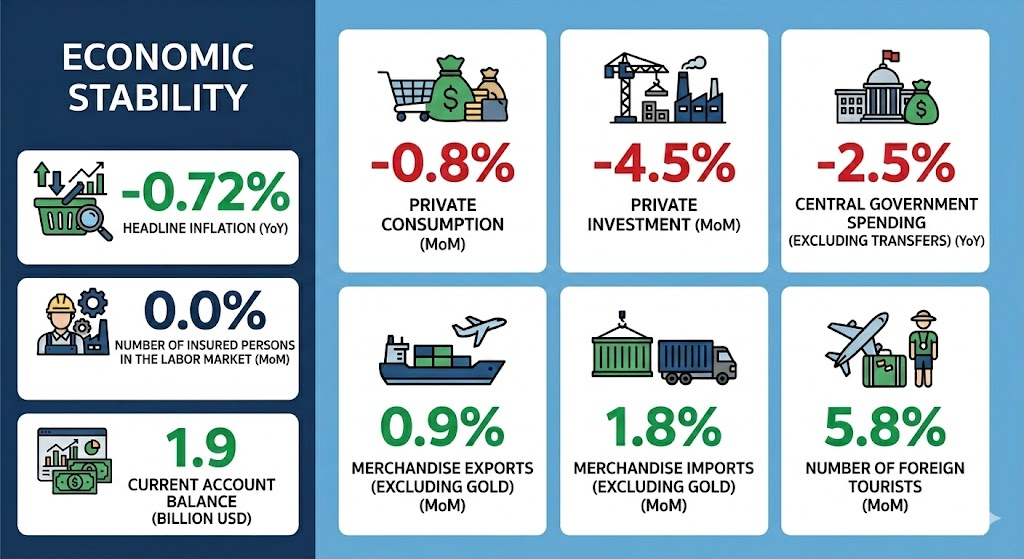
Source: Bank of Thailand
Table showing economic forecasts for Thailand in 2025 (data as of October 2025).
Percentage(%) | 2024 (A) | 2025 (A) | 2026 (F) |
Economic Growth Rate | 2.5 | 2.2 | 1.6 |
Headline Inflation | 0.4 | 0 | 0.5 |
Core Inflation | 0.6 | 0.9 | 0.9 |
Interest Policy | 2.25 A | 1.25 A | 1.25 – 1.00F |
Source: Bank of Thailand (A = actual, F = forecast)
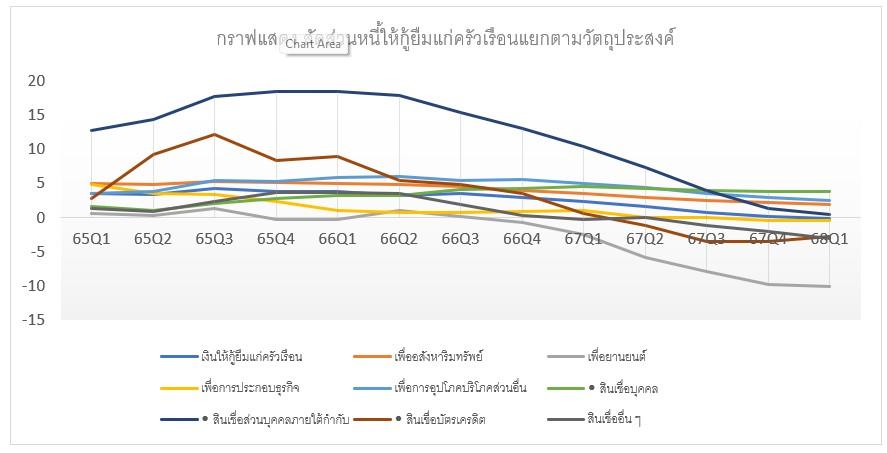
Thai Household Debt and Credit Growth Rate Household debt contracted slightly in Q1 2025, totaling 16.35 trillion baht, a 0.1% decrease from a 0.2% expansion in the previous quarter. This resulted in a continued decline in the household debt-to-GDP ratio, reaching 87.4% compared to 88.4% in the previous quarter. Considering household lending sources, commercial banks were the largest creditors, accounting for 37.6% of total household debt. Credit contracted by 3.0%, marking the fourth consecutive quarter of contraction. Meanwhile, specialized state financial institutions (SFIs), the second largest lenders to households, still saw credit growth of 1.8%. Unemployment Rate and Wages Employment in Q2 2025 remained stable, with non-agricultural employment at levels similar to Q2 2024. The agricultural sector continued to struggle. The impact on businesses and employment from US import tariffs, adapting to changing employment patterns, and the shortage of foreign labor remain key concerns. Including measures to prevent workplace hazards. In the second quarter of 2025, the employment situation remained stable compared to the same period of 2024, with the number of employed persons at 39.5 million, a slight increase of 0.02 percent from the same period of 2024. This was driven by employment in the non-agricultural sector, which expanded by 0.4 percent. The transportation and warehousing sector showed the highest growth at 7.9 percent, followed by the hotel and restaurant sector, which continued to grow at 3.1 percent. Meanwhile, employment in the manufacturing sector recovered slightly, expanding by 0.5 percent compared to the previous year. The construction and retail/wholesale trade sectors contracted by 3.7 percent and 1.2 percent, respectively. At the same time, agricultural employment continued to contract by 0.9 percent, with a significant decrease in the northern region, which was affected by heavy rainfall and flooding since February of the year. The average wage in the private sector increased to 14,370 baht per person per month. Increased by 2.4 percent from Q2/2024, similar to the average wage of workers in the formal sector, which stood at 15,712 baht per person per month, an increase of 2.5 percent from the previous year. However, considering the average wage of all workers overall, it was 15,977 baht per person per month, a decrease of 1.9 percent from the previous year, indicating a decrease in income for self-employed workers. Personal Loan and Hire Purchase Loan Industry Household borrowing categorized by debt purpose in the same quarter showed that several loan types continued to contract, including automotive loans, which contracted by 10.0 percent, marking the sixth consecutive quarter of contraction. This is due to lenders tightening loan approvals following the increasing trend of automotive loan defaults, consistent with the decline in car and motorcycle sales. Similarly, credit card loans contracted by 2.8 percent, and business loans contracted by 0.4 percent. Meanwhile, loans showing slower growth included personal loans and regulated personal loans. Growth slowed to 3.8% and 0.5%, down from 4.3% and 1.4% respectively. Loans for real estate expanded by only 1.9%, down from 2.2% in the previous quarter, due to the declining economic conditions and reduced household demand for housing. However, in the coming period, real estate borrowing may increase due to government stimulus measures for the real estate sector, such as the reduction of transfer and mortgage registration fees to 0.01%, and the relaxation of loan-to-value (LTV) ratio regulations for housing loans by the Bank of Thailand, which will come into effect from the second quarter of 2025 onwards (Source: National Economic and Social Development Council).
The table shows the proportion of debt extended to households by purpose
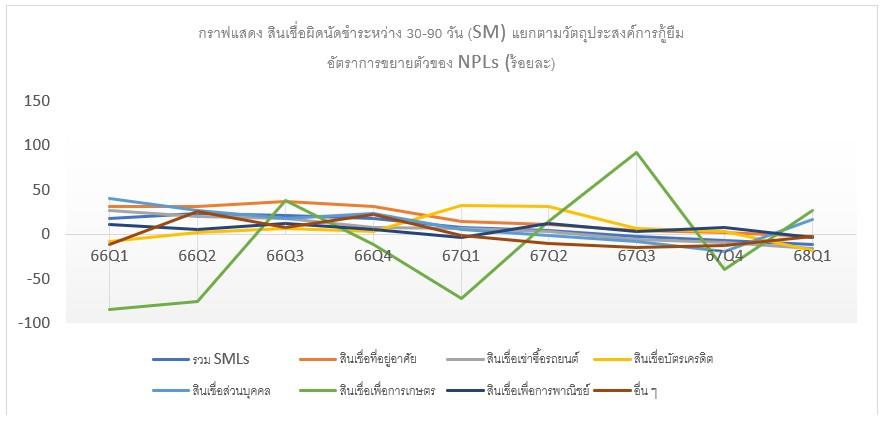
Household debt repayment capacity remains a problem, according to credit bureau data. Although personal loans overdue for more than 90 days (NPLs to total loans) decreased in the first quarter of 2025, falling to 8.78% from 8.94% in the previous quarter, and the NPL ratio decreased in almost all loan categories except auto hire purchase loans and credit card loans, this decrease was due to a contraction in lending. Meanwhile, NPLs still expanded by 8.7%, totaling 1.19 trillion baht. Loans overdue for 1-3 months (SMLs) accounted for 4.25% of total loans, up from 4.17% in the previous quarter.
The table shows 30-90 day overdue (SM) loans categorized by loan purpose
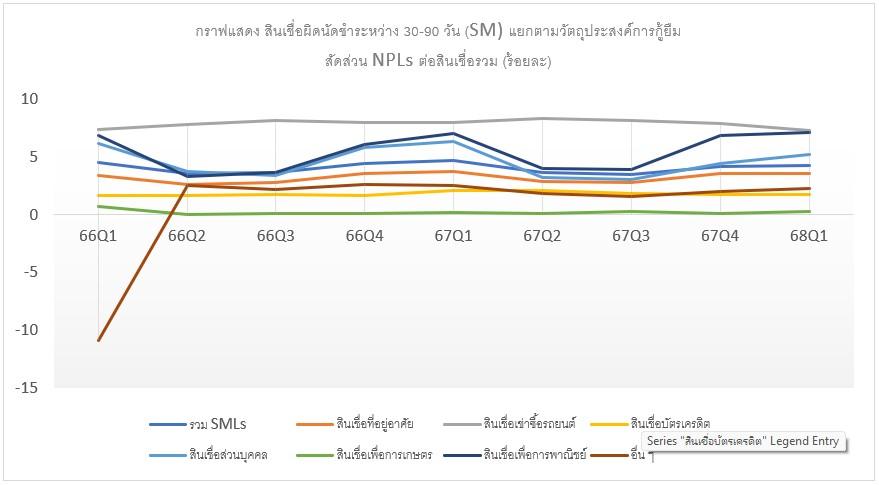
The table shows loans that are in default for more than 90 days (NPLs), categorized by loan purpose
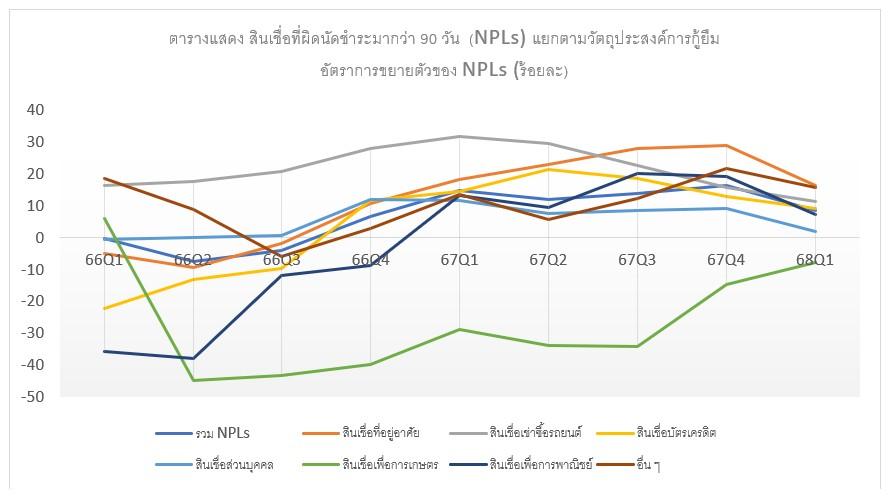
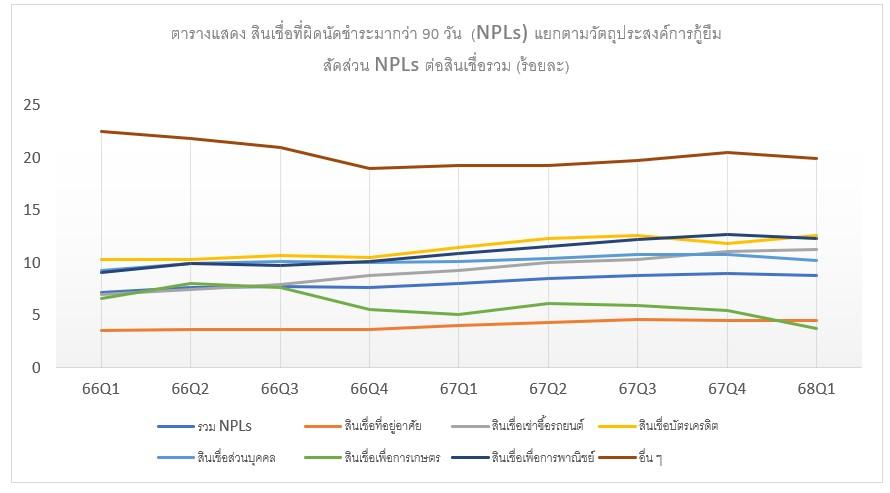
Automotive IndustryAutomotive Market Situation The automotive market in Q3 2025 is showing signs of recovery in some segments, particularly passenger cars and electric vehicles (xEVs), as evidenced by the year-on-year increase in July sales. However, the overall trend for the first half of the year remains sluggish, especially in the commercial vehicle and pickup truck markets, which are still affected by economic factors and limited access to credit. Automotive Market Trends (Q3 2025) 1. Segmented Recovery: The passenger car and four-wheel drive vehicle markets are showing clear signs of recovery, especially in July 2025, when passenger car sales increased by 9.4% and commercial vehicle sales increased by 2.5% year-on-year. 2. Growth of Electric Vehicles (xEVs): The xEV market continues to expand, particularly 100% electric vehicles (BEVs), which saw a 59.9% increase in sales by June 2025. 3. Government Policy Implementation: The market recovery in some areas is supported by government measures to stimulate the production and use of electric vehicles. Factors Affecting the Automotive Market 1. Economic and Investment Conditions: Consumer and business confidence is recovering slowly, directly impacting car purchase decisions and private sector investment. 2. Credit Approval Constraints: High levels of household debt mean financial institutions remain stringent in their lending practices, hindering new car purchases. 3. Political Uncertainty: Delays in the annual budget and political instability continue to be risk factors affecting market confidence. 4. Role of Government Policy: Policies supporting electric vehicles (eVs), including tax incentives, production promotion, and infrastructure investment, remain crucial in driving the continued growth of the xEV market. Used Car Market Situation The Thai used car market in 2025 continues to face a slowdown in both the volume of vehicles entering the market and sales figures. This is affected by the overall economic conditions, stringent lending practices by financial institutions, and intense competition from new cars and electric vehicles (EVs). Overview of the Used Car Market 1. The market is facing a continuous crisis for the third year. 2. Sales have decreased from 406,000 units in 2023 to only 316,000 units in 2024. 3. In 2025, sales are projected to fall to only 285,000 units, or a further contraction of approximately 10%. 4. The average number of cars entering the market per month (first 5 months of the year): only 18,458 units/month, a 28% decrease compared to the same period last year. Main factors dragging down the market: 1. Continued stricter lending standards from financial institutions: Loan disbursements for used cars have decreased by more than 25% in 2023–2024 and are expected to continue decreasing by another 10% in 2025. 2. Competition from new cars and electric vehicles: The price of used cars is being pressured as consumers opt for new EVs with more attractive promotions. 3. Economic slowdown: Reduced consumer purchasing power due to high cost of living, high household debt, and economic instability. Solutions: 1. Collaboration across all sectors: The Used Car Dealers Association is calling on dealers, the government, and financial institutions to cooperate in revitalizing the market. 2. Tax policy proposals: Mr. Paophum Rojanasakul, Deputy Minister of Finance, proposed adjusting the tax structure to support the use of domestically produced parts (Local Content) to reduce vehicle production costs. 3. Enhancing the credibility of the used car market: This includes measures such as grading the quality of used cars and providing after-sales warranties to build consumer confidence and encourage financial institutions to resume lending. Electric Vehicle MarketElectric Vehicle Market 100% BEV Registration Figures for Thailand: 2020: Total BEV registrations: 1,056 units 2021: Total BEV registrations: 1,935 units 2022: Total BEV registrations: 9,729 units 2023: Total BEV registrations: 76,314 units 2024: Jan-Aug: Total registrations: 50,132 units 2025: Jan-Sep: Approximately 66,000 units 1. New BEV registrations in the first nine months of 2025 remain stable compared to the previous year. 2. HEV and PHEV vehicles continue to show growth. Especially among consumers who are still not 100% confident in BEVs. 3. Total new vehicle registrations (Passenger Cars + 1 Ton Pickups): - 2023: 798,582 units, 2024 (end of August): 314,121 units Trending downwards. BEV and other EV market trends in Q3 2025: 1. Intense price competition: 1.1 The EV price war from China continues, with price reductions of 10–30% throughout the year. 1.2 For example, the NETA X, assembled in Thailand, launched at a price of only 739,900–799,000 baht. 1.3 Other car manufacturers are having to quickly adjust prices to maintain competitiveness. 1.4 The price of key raw materials like Lithium continues to fall It is expected that the cost of EV production will decrease further in the medium term. 2. Impact of continued price reductions: 2.1 Consumers are delaying purchasing decisions, waiting for prices to drop. 2.2 The price of used ICE vehicles is falling. Impact on Leasing Providers and Auction Yards: 2.3 Leasing companies must accelerate the sale of repossessed vehicles to avoid losses from resale value. 2.4 The market continues to decline. 3. Challenges to Confidence in BEVs: 3.1 Consumers are beginning to question cost-effectiveness and ease of use, such as: 3.2 Difficulty finding charging stations in rural areas. 3.3 Higher insurance costs than conventional cars. 3.4 High battery replacement and maintenance costs. 3.4 Backlash: Consumers are beginning to favor HEV/PHEV, which are generally more convenient to use.
Key Trends in Q4 2025 and 2026: 1. BOI prepares new investment promotion measures to attract domestic EV and battery production. 2. EV infrastructure, such as charging stations and online vehicle registration systems, will be a growth catalyst. 3. Japanese automakers are beginning to launch new, affordable hybrid models to cater to consumers who are still hesitant about 100% battery-powered vehicles. Agricultural Sector: The Thai agricultural sector faces several challenges in the second half of 2025, particularly oversupply, which is putting downward pressure on the prices of major crops, and slowing rice exports due to global market conditions. However, production in some categories, such as pigs, beef cattle, and tilapia, shows signs of recovery due to improved disease control and government policy support. Agricultural Income (5 Major Crops) 1. Farmers' income from major crops (rice, cassava, rubber, sugarcane, oil palm) is projected to contract by approximately 16% in 2025, to around 810 billion baht. 2. Main reasons: Oversupply in both domestic and regional markets, coupled with a lack of export recovery, leading to continuously low product prices. 3. There is a risk that this trend will extend into 2026.
Specific problems for key agricultural products.
Crop / Product | Key Issues |
Rice | Exports contracted by ~40% (down by over 9 million tons). This has pressured paddy rice prices down by 35–40%, despite an increase in overall yield. |
Palm Oil | Biodiesel demand dropped by ~3 million tons/year. This is due to energy policies that do not align with the current market situation. |
Cassava | China has shifted factory locations to CLMV countries. Consequently, the production share from neighboring countries surged to 71%, causing Thailand to lose market share. |
Sugar Cane | Global sugar prices declined due to increased production from Brazil. This, in turn, has put downward pressure on Thai sugar prices. |
Para Rubber | Negatively impacted by the global slowdown in the automotive industry. |
Key Risk Factors: 1. Unpredictable weather conditions due to Drought-Heavy rain / Flooding affect crop quantity and quality. 2. Continued price volatility in agricultural commodities, especially export products. 3. Uncertain global economic situation and increasingly stringent trade protectionist policies. 4. Continued tight US monetary policy, leading to a weaker Thai baht, but this doesn't significantly boost exports as global demand remains sluggish. Agricultural Products with Positive Outlook: 1. Pigs, beef cattle, and tilapia: Improved outlook due to successful disease control and government support measures. 2. Batavia pineapples: Benefiting from favorable weather conditions and improved product quality. Electrical Appliances (Air Conditioners):Thai Air Conditioner Market Situation in 2025: 1. The Thai air conditioner market in 2025 faces a crisis with negative sales growth for the first time in four years, contracting by 22% compared to the same period of the previous year (first 5 months). 2. Key factors pressuring the market include economic slowdown, mild weather, and a later onset of warmer weather than the previous year. And consumers are cautious about spending. 3. In the first 5 months, the overall home appliance market contracted by approximately 8%, with air conditioners being one of the segments that saw the largest decline (~22%). Market Size & Sales 1. The total Thai home appliance market is valued at approximately 230-240 billion baht. 2. The total air conditioner market value is approximately 25-30 billion baht per year, with sales in the range of 2.4-2.6 million units per year (approximately). 3. Reports indicate that in 2025, the air conditioner market may experience only slight growth or remain stagnant due to several negative factors. Impact & Support for Manufacturers 1. All major brands in Thailand (e.g., Daikin, Mitsubishi, Toshiba, LG, Midea, Haier, etc.) have been affected, with sales declining compared to last year. 2. However, Haier was able to mitigate some of the impact – sales decreased by approximately 10%, which is less than the overall market average decline of approximately 22%. 3. It is expected that in the second half of the year... Every brand is focusing on aggressive promotions, such as 10-15% discounts, to boost sales. Thailand's Role as a Global Air Conditioner Manufacturing Base 1. Thailand is recognized as one of the world's leading air conditioner manufacturing bases, with significant production and export volumes. 2. Reports indicate that in 2024, Thailand produced 19 million air conditioners, ranking 3rd globally in air conditioner production. 3. In some years, Thailand was reported to be the world's second-largest exporter of air conditioners. 4. LG (Thailand) operates a factory in Rayong, serving as an export hub from Thailand to various countries, with a total production capacity of nearly 6 million units per year.
Industry TrendsIn 2025, the company will be impacted by the following legislation and operational guidelines from regulatory agencies: Bank of Thailand Policy Responsible Lending Guidelines The Responsible Lending guidelines have been upgraded from requesting cooperation from financial institutions to assisting borrowers, aiming to mandate that financial institutions provide responsible and fair lending throughout the debt cycle. The goal is to achieve sustainable long-term solutions to household debt, comprising three main areas: 1. More effective assistance for borrowers by adjusting the conditions for assisting borrowers with chronic debt and relaxing the guidelines for assessing debt repayment ability for debt consolidation and loans for refinancing from other providers. (These improved guidelines will help borrowers receive better repayment terms and make repayments that align with their ability to repay.) 2. Improved financial discipline and incentives for borrowers to choose repayment levels appropriate to their ability and to make additional payments only when possible, reducing long-term interest burdens. This is achieved by requiring service providers to provide additional information on debt repayment and borrowing costs, both before and during the debt period. 3. Clear guidelines for service providers. This aligns with established guidelines and existing business practices, relaxing the debt repayment capacity assessment process to allow for the inclusion of guarantor incomes in certain loan types, as is widely practiced currently. Furthermore, it enables debt restructuring to utilize a method of inquiring about borrowers' repayment ability instead of relying on documentation. The Bank of Thailand (BOT) has consistently prioritized addressing household debt problems through measures based on three key principles: 1) A comprehensive approach, covering both resolving existing problematic debt to help borrowers settle it within a reasonable timeframe and providing quality new loans to prevent excessive borrowing; 2) Adherence to principles, ensuring borrowers can still access future credit for liquidity and preventing lax debt repayment discipline; and 3) Collaboration across all sectors, involving the government, private creditors, and borrowers. The BOT closely monitors the effectiveness of these measures and incorporates feedback from stakeholders to continuously adapt debt relief measures to the evolving situation. Therefore, Responsible Lending measures will improve the quality of new loans without specific requirements or criteria. Financial institutions will primarily assess lending risk based on the borrower's ability to repay, making Responsible Lending a barrier to public access to credit. Regulation of Automobile and Motorcycle Leasing and Hire Purchase Businesses Part 1: Guidelines and Regulations for Automobile and Motorcycle Leasing and Hire Purchase Businesses The automobile and motorcycle leasing and hire purchase business is a significant source of funding for the public, with relatively high transaction volumes. This has significant implications for the overall economy and affects a wide range of people. Currently, there is no specific law regulating such businesses. Therefore, the government issued a Royal Decree placing the automobile and motorcycle leasing and hire purchase business under the Financial Institutions Business Act B.E. 2551 (2008), B.E. 2568 (2025). This decree empowers the Bank of Thailand (BOT) to regulate automobile and motorcycle leasing and hire purchase businesses that are not financial institutions (excluding individuals, taxi cooperatives, and other legal entities as specified by the Minister). On December 3, 2025, the BOT issued an announcement regarding the criteria, methods, and conditions for conducting automobile and motorcycle leasing and hire purchase businesses. To enhance the financial services provided by hire-purchase and leasing businesses for automobiles and motorcycles under the supervision of the Bank of Thailand (the businesses), ensuring they are responsible, fair, and transparent. This is to ensure customers receive standardized services that meet their needs, complete product information, and fair and reasonable pricing and terms. Furthermore, customers should receive support and assistance when facing debt repayment difficulties, have avenues for complaints, and receive fair solutions. At the same time, such supervision will help the Bank of Thailand better maintain economic and financial stability, particularly regarding household debt. The regulations comprise five areas as follows:
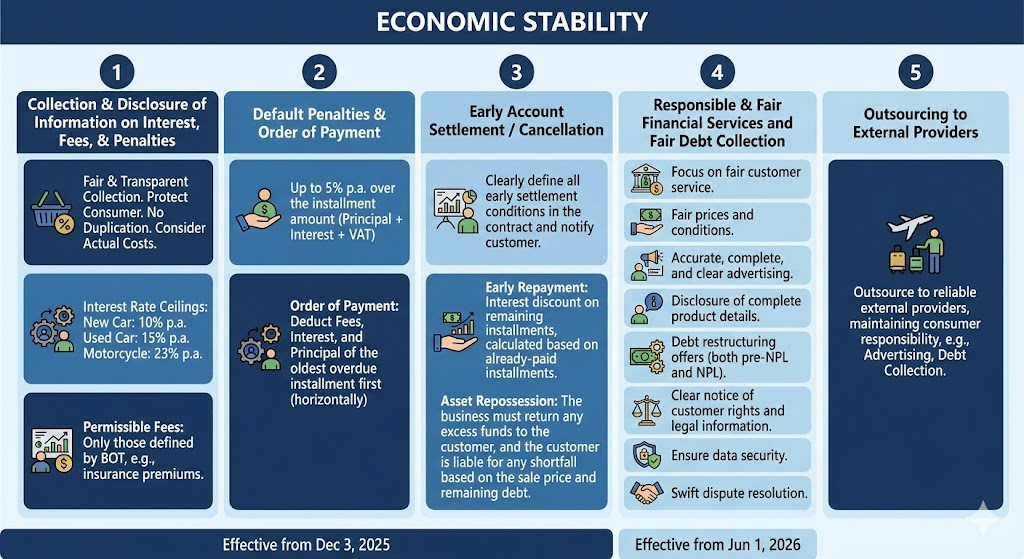
The scope and effective dates of the regulations are divided into two main groups: 1. Various regulations regarding the practice and disclosure of information on interest, service fees, and penalties; types of fees that can be charged; the order of debt repayment; specifying conditions for account closure/early contract termination; responsible and fair financial services; and the use of services from external service providers will be effective from June 1, 2026, to allow leasing businesses to prepare and comply with the regulations efficiently and smoothly. 2. Regulations regarding interest rate ceilings, calculation of overdue interest, and discounts for early account closure for leasing to individuals for personal use will only apply to new contracts entered into from December 3, 2025 onwards. Part 2: Requesting cooperation from non-financial leasing businesses to assist debtors affected by natural disasters and the Thai-Cambodian border situation. On December 15, 2025, the Bank of Thailand issued a circular requesting cooperation from non-financial leasing businesses to consider assisting debtors affected by natural disasters. This includes addressing the unrest along the Thai-Cambodian border, as well as providing funding and liquidity to debtors so they can continue their occupations, businesses, or personal use of their assets. It also involves ensuring debt restructuring aligns with debtors' needs, with approval for assistance to be completed within 12 months. Furthermore, during the assistance period, non-financial leasing and hire-purchase businesses are requested not to charge late interest, service fees, penalties, or any other additional fees to debtors. When collecting principal and interest calculated during the assistance period, methods should be used that do not impose an undue burden on debtors, and no lump sum payment should be collected at the end of the assistance period. This request for cooperation is consistent with the guidelines currently applied to businesses under the Bank of Thailand's supervision. 3.1.2 Policy of the Office of the Consumer Protection Board The Office of the Consumer Protection Board has issued a notice regarding contracts, designating the hire-purchase of agricultural tractors and agricultural machinery as a controlled contract business under the 2025 Act, effective from January 10, 2026. This is significant good news for farmers and those engaged in agricultural occupations, enhancing protection and fairness in this crucial business sector for their livelihoods. To prevent exploitation by businesses, this new measure focuses on standardizing contract terms and interest rates to ensure fairer access to funding and tools for farmers' livelihoods. The main focus is on limiting interest rates; most notably, the effective interest rate in hire-purchase contracts must not exceed 15% per year. This will help reduce excessive interest burdens for farmers. This significant change strengthens the agricultural sector. The expansion of the Consumer Protection Board's (CPB) control to include agricultural machinery hire-purchase businesses reflects a growing awareness of the importance of Thai agriculture. This regulation not only protects farmers from unfair contracts and excessive interest rates but also establishes new standards for agricultural machinery hire-purchase businesses, promoting greater transparency and fairness in the agricultural financial ecosystem. It requires businesses to use fair contract terms, incorporating essential elements as per the standard contract template stipulated by law, including: 1. Details of hire-purchase payment; 2. Method of calculating the amount payable by the consumer; 3. Ability to request extensions for hire-purchase repayment periods; 4. Discounts for early repayment of hire-purchase accounts. 5. The effective interest rate must not exceed 15 percent per year. 6. The consumer's right to terminate the contract and the debt obligation schedule. 7. If a business operator fails to comply with this announcement, it will be considered a violation of the law and subject to the penalties prescribed.
Supporting Factors in 2026
Table showing positive factors in 2026
No. | Positive Factors | Positive Impacts | Opportunities |
1 | New Government Policies
| Reduced living expenses for citizens and improved debt repayment ability. | Better debt collection potential as customers have improved financial liquidity from government support. |
2 | Tourism | Increased economic activity, leading to better income for the public. | Higher demand for loans in the service sector. |
3 | Low Unemployment Rate | The population earns income from both the manufacturing and service sectors. | Availability of income for general expenses and debt servicing. |
4 | Automotive Industry Growth | Expansion of hybrid (PHEV, HEV) and 100% electric vehicles (BEV). | Increased demand for auto loans. |
5 | Loan Industry Growth | Growth in tourism drives higher demand for credit in the service sector. | Overall increase in loan demand. |
Limitations and Risk Factors in 2026
Table showing negative risk factors in 2026
No. | Risk Factors | Impacts | Monitoring / Measures |
1 | Deteriorating Auto Loan Quality; high levels of SM (Special Mention) and NPL (Non-Performing Loans). | May lead to increased car repossessions, raising market supply. High household debt hampers demand, potentially causing a sharp drop in resale prices. | Use extreme caution in customer screening. Accelerate the disposal of repossessed car inventory to minimize losses from oversupply. |
2 | High Household Debt | Low capacity to take on new debt. | Increased defaults and continuous customer credit downgrades. |
3 | Floods and Droughts | Impact on employment and income of farmers, especially from severe droughts, affecting debt repayment ability. | Exercise caution in lending to farmers in areas at risk of floods and droughts. |
4 | Global Conflicts (Russia-Ukraine, Israel-Lebanon-Iran) | Economic uncertainty and impact on tourist arrival numbers. | Monitor international situations, tourist numbers, and import/export of goods and services. |
5 | Potential Economic Downturn in major nations (USA, China, Japan, Eurozone) | Fewer tourists visiting Thailand, affecting the revenue of corporate clients and their repayment ability. | Monitor the economies of major nations like China, Europe, USA, Russia, Japan, and Korea. |
6 | Repossessed Car Oversupply and significant drop in used car price index. | Increased losses from the sale of repossessed vehicles. | Accelerate the disposal of repossessed cars from inventory as quickly as possible. |
7 | BEV (Electric Vehicle) Market Growth | Impacts used car resale prices as they must lower prices to compete. | Accelerate the disposal of repossessed cars from inventory as quickly as possible. |
Procurement of Products & Services
Reporting Mode
3117
Procurement (Overall)
In the lending services business, the primary procurement of products and services involves the acquisition of capital to support lending operations. Currently, the Company’s sources of funds include shareholders' equity, loans from financial institutions, debentures, loans from related parties, and loans from other individuals.
As of December 31, 2025, the Company’s funding structure is summarized as follows:
Source of funds | As of Dec 31, 2024 (2567) | % | As of Dec 31, 2025 (2568) | % |
Loans from Financial Institutions | ||||
Short-term Loans | 385.5 | 3.0 | 220.1 | 2.4 |
Long-term Loans | 6,331.2 | 49.8 | 3,469.1 | 38.7 |
Total Loans from Institutions | 6,716.7 | 52.8 | 3,689.2 | 41.1 |
Debentures | 756.9 | 6.0 | 146.7 | 1.6 |
Loans from other persons | - | - | 17.0 | 0.2 |
Loans from related parties | - | - | 41.0 | 0.5 |
Shareholders' Equity | 5,240.4 | 41.2 | 5,076.5 | 56.6 |
Total Funding Sources | 12,714.0 | 100.0 | 8,970.4 | 100.0 |
As of December 31, 2025, the Company’s funding structure consisted of loans from financial institutions at 41.1%, debentures at 1.6%, loans from other individuals at 0.2%, loans from related parties at 0.5%, and shareholders' equity at 56.6% of the total source of funds. Notably, long-term loans from financial institutions accounted for 38.7% of the total source of funds, representing 94.0% of the total loans from financial institutions.
Projects Under Construction
Has Projects Under Construction (Y/N)
No
Debentures & Bills of Exchange
Has Debentures (Y/N)
No
Convertible Securities
Has Convertible Securities (Y/N)
No